Short answer: most channels with 1 million subscribers earn somewhere between a few thousand and a few tens of thousands of dollars a month from YouTube itself, and sponsorships often add as much again. YouTube does not pay anything per subscriber. It pays for views, for ads shown on those views and for what fans spend on memberships and Supers, so two channels of the same size can land very far apart.
| Monthly views | RPM | YouTube revenue |
| 300,000 | $2 | $600 |
| 1,000,000 | $3 | $3,000 |
| 3,000,000 | $10 | $30,000 |
RPM is what you earn per 1,000 views after YouTube takes its share. The three rows above are worked examples, not averages, and they show why the subscriber number alone tells you very little. The rest of this guide explains where the money comes from, what real million-subscriber creators have reported and how to estimate your own channel.
Grow Your YouTube Fast
Hit your monetization goals instantly. Increase subscribers, views, and watch hours.
YouTube Pays for Views, Not Subscribers
A subscriber is someone who chose to follow a channel. That choice costs them nothing and earns the creator nothing on its own. Money appears only when people watch, when ads run on those views or when viewers pay for something like a channel membership.
Subscribers also watch far less than most people expect. One partner network that studies creator analytics estimates that only about 3 to 10 percent of subscribers watch any given upload, which works out to roughly 30,000 to 100,000 views per video from the subscriber base of a 1 million subscriber channel. The rest of a healthy channel’s views come from search, suggested videos and the home feed, often months after a video goes live.
That is why upload habits matter so much. A channel that posts five long videos a month collects far more views than one that posts two, even with the same subscriber count. A big back catalog that keeps getting found in search earns every month without any new work.
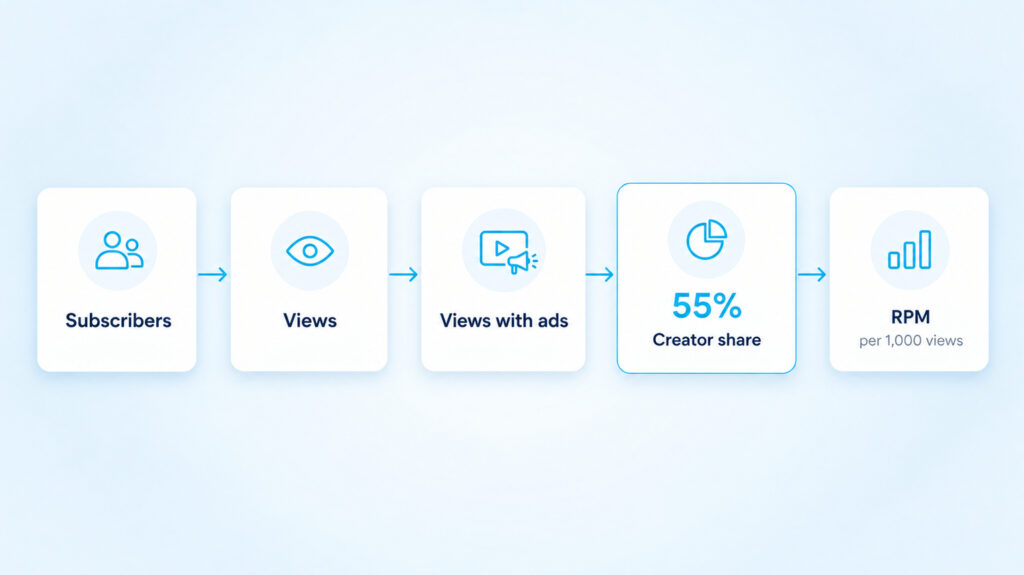
How YouTube Splits the Money
Each revenue stream on YouTube has its own split, and mixing them up is the most common mistake in earnings guides. YouTube lists the current rates in its partner earnings overview, and the same page states plainly that the partner agreement guarantees no set amount.
Long-Form Videos
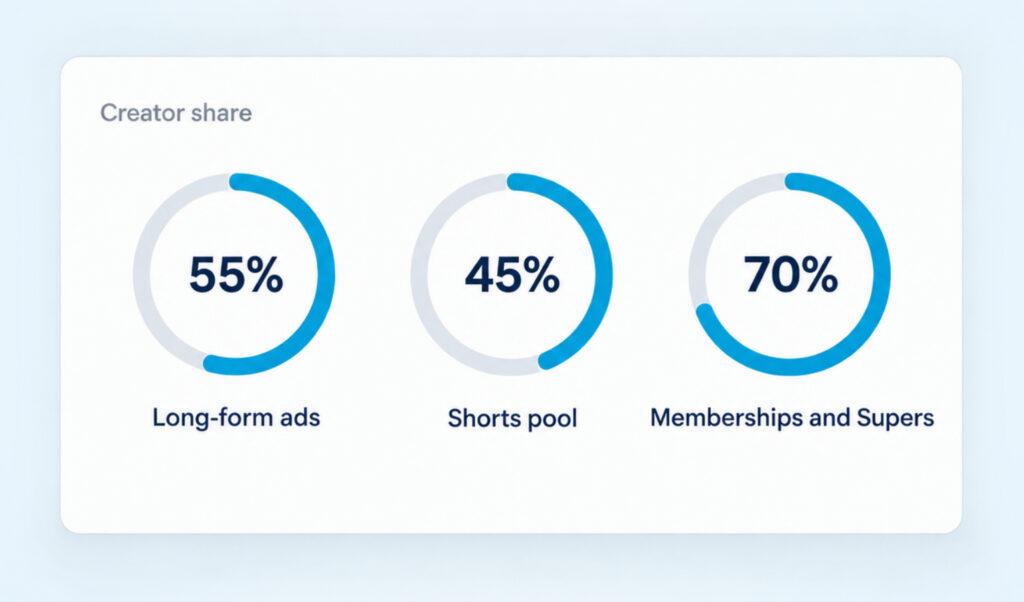
For regular videos, YouTube pays creators 55 percent of the net revenue from ads shown on the watch page. The same rate applies when the video plays in an embedded YouTube player on another site. Longer videos can carry mid-roll ads, but more ad breaks only help if viewers keep watching, so there is no fixed number of ads that suits every video.
YouTube Premium members see no ads. Instead, YouTube shares part of their monthly fee with the creators they watch, so a channel with many Premium viewers still earns from those views.
Shorts
Shorts are paid in a completely different way. Ads that run between Shorts in the feed go into a shared pool each month, and YouTube splits that pool among monetizing creators by their share of engaged views in each country. Creators keep 45 percent of the revenue allocated to them.
Music changes the math before the split happens. According to YouTube’s Shorts monetization policies, a Short with one music track sends half of its revenue to the Creator Pool and half to music licensing. With two tracks, only one third reaches the pool. This is a big reason Shorts usually earn much less per view than long videos, even on huge channels.
Memberships, Supers and Other Fan Payments
Channel memberships, Super Chat, Super Stickers and Super Thanks pay creators 70 percent of net revenue. These payments come straight from fans, so they depend on how loyal an audience is rather than on ad rates.
The numbers can add up quickly for a channel with a close community. For example, 1,000 members paying $4.99 a month bring in about $4,990, and a 70 percent share leaves roughly $3,490 before tax. How many people join depends on the perks and the audience, and education or coaching channels tend to turn more viewers into members than entertainment channels do.
RPM by Niche: Why Two Channels Earn So Differently
Two numbers show up in every YouTube earnings discussion. CPM is what advertisers pay for 1,000 ad impressions, measured before YouTube’s share. RPM is what the creator actually earns per 1,000 views after the split.
YouTube’s guide to ad revenue analytics explains why RPM is always lower. It counts every view, including the ones where no ad played, and it includes ads, Premium, memberships and Supers. Sponsorships and merch sales are not part of it. RPM is the better number for estimating income, because it already reflects everything YouTube pays you.
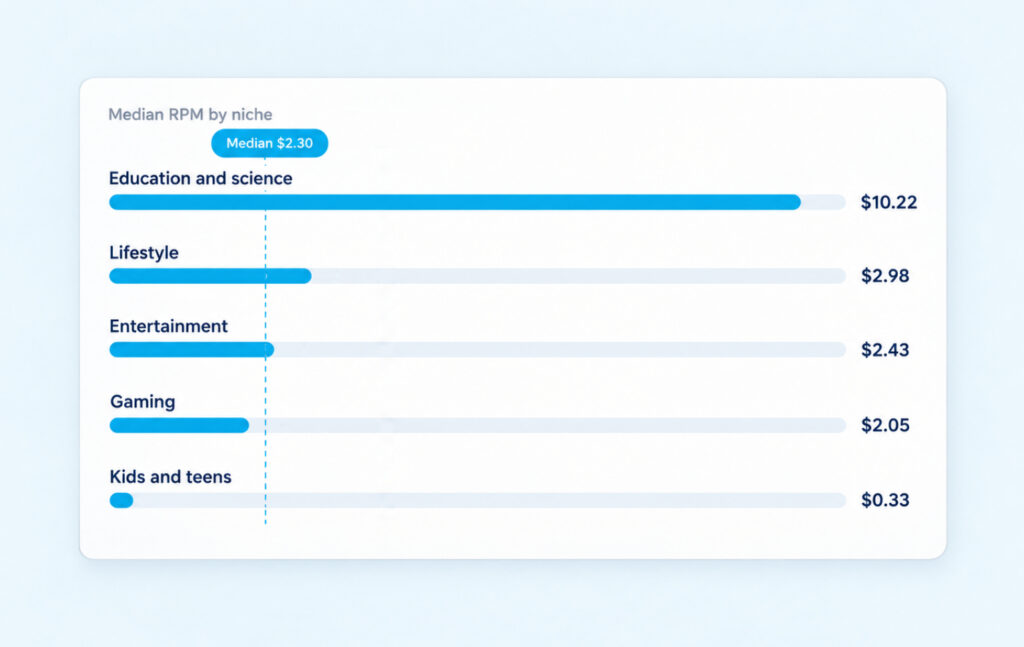
The topic of a channel moves RPM more than almost anything else. One partner network measured median RPM across 300 monetized channels over the year to May 2026:
| Niche | Median RPM |
| Education and science | $10.22 |
| Lifestyle | $2.98 |
| Entertainment | $2.43 |
| Gaming | $2.05 |
| Kids and teens | $0.33 |
The median across all niches in that sample was $2.30. Treat these as one sample, not fixed rates, because some finance channels have reported RPMs near $20, as the next section shows. Viewer location matters just as much. Advertisers pay more to reach viewers in the United States, Canada, the UK and Western Europe, so the same video can earn noticeably more with a US audience than with a global one. The share of views that actually show an ad also varies, and in the same sample the median was about half.
What Million-Subscriber Creators Have Actually Reported
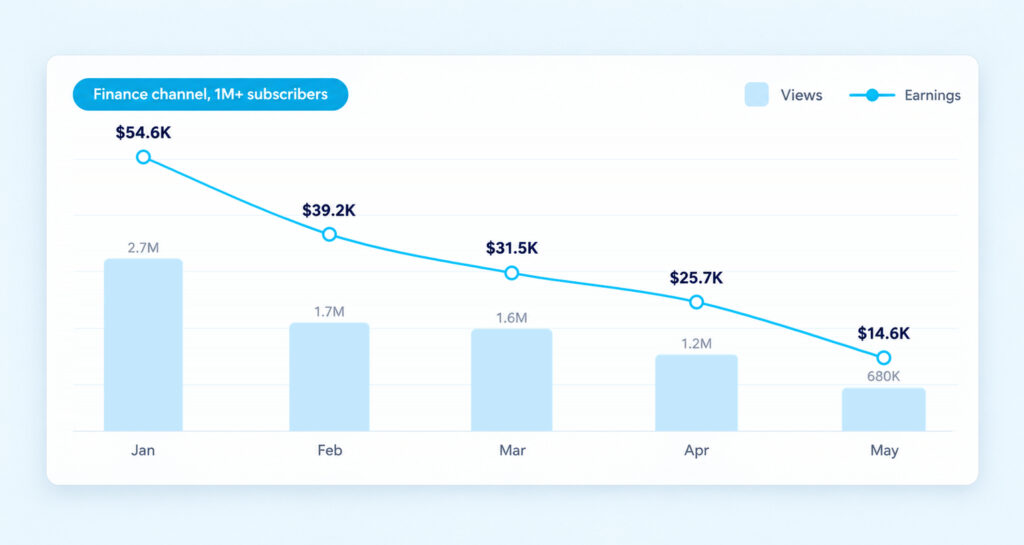
Real numbers are rare, so the few documented examples are worth reading closely. Finance creator Nate O’Brien, who had more than 1 million subscribers, shared his Partner Program earnings for the first five months of 2021, backed by his own documentation:
| Month (2021) | Views | Partner Program earnings |
| January | 2.7 million | $54,600 |
| February | 1.7 million | $39,200 |
| March | 1.6 million | $31,500 |
| April | 1.2 million | $25,700 |
| May | 680,000 | $14,600 |
The subscriber count barely changed across those months, but earnings fell by almost three quarters. His RPM stayed between about $20 and $23 the whole time, so the swing came almost entirely from views. Finance is also one of the best-paying niches, which is why his RPM was so high.
Lifestyle creator Tiffany Ma, who had 1.8 million subscribers at the time, said her videos earned between $4,500 and $11,500 a month. Her audience was larger than O’Brien’s, yet her YouTube income was lower, because lifestyle ads pay less than finance ads. Both examples point to the same lesson: views and niche set the income, and the subscriber count only sets the ceiling on how many views are likely.
Sponsorships and Other Income Beyond Ads
Partner network data suggests that once a channel passes about 250,000 subscribers, sponsorships usually overtake ad revenue as the largest single source of income. None of this money flows through YouTube, so it never appears in your RPM.
How Brands Price a Sponsored Video
Most brands price a deal on the views a video is likely to get, not on subscribers. A common formula is average views per video multiplied by a sponsor CPM and divided by 1,000, and sponsor CPMs of $15 to $50 are common for integrations. A channel averaging 150,000 views per video at a $25 sponsor CPM would quote about $3,750 for one integration. Dedicated videos, usage rights that let the brand reuse your clip in its own ads and exclusivity clauses that block competing sponsors are all fair reasons to charge more.
Brands usually ask for proof before they sign. A simple media kit lists your average views, audience countries and links to every channel, including your Instagram profile URL. Keep the view figures honest, because brands check them against the results they get.
Merch, Affiliate Links and Other Platforms
Merch, affiliate links, courses and paid communities all sit outside YouTube’s revenue share. YouTube Shopping can show your products under videos, while affiliate links pay a commission on purchases made through your descriptions. These streams vary more than ads do, and they work best when the product fits what the audience already watches you for.
Most large creators also post elsewhere, and each platform pays differently. If you post Reels too, it helps to know how Instagram pays for views, because its programs work nothing like YouTube’s. Fans who send Super Chats behave much like viewers who send gifts on TikTok, and the guide on how to make money from TikTok Gifts is a useful comparison.
Want your YouTube channel to finally grow?
Real subscribers. Real watch hours. No bots, no shadowbans, ever.
See our YouTube servicesTaxes, Payouts and the 2027 Rule Changes
YouTube pays once a month through AdSense. Earnings for one month are finalized early in the next month, and payment is issued around the 21st, as long as the balance has reached the $100 payment threshold and there are no holds, according to Google’s AdSense payment timeline. If the balance is lower, it rolls over to the next month.
Taxes come out before the money reaches you. Google withholds US tax on earnings from viewers in the United States, at a rate between 0 and 30 percent depending on your tax info and any tax treaty. If you never submit tax info, Google may withhold up to 24 percent of your total worldwide earnings, as YouTube explains in its US tax requirements guide. Your local income tax comes on top of that.
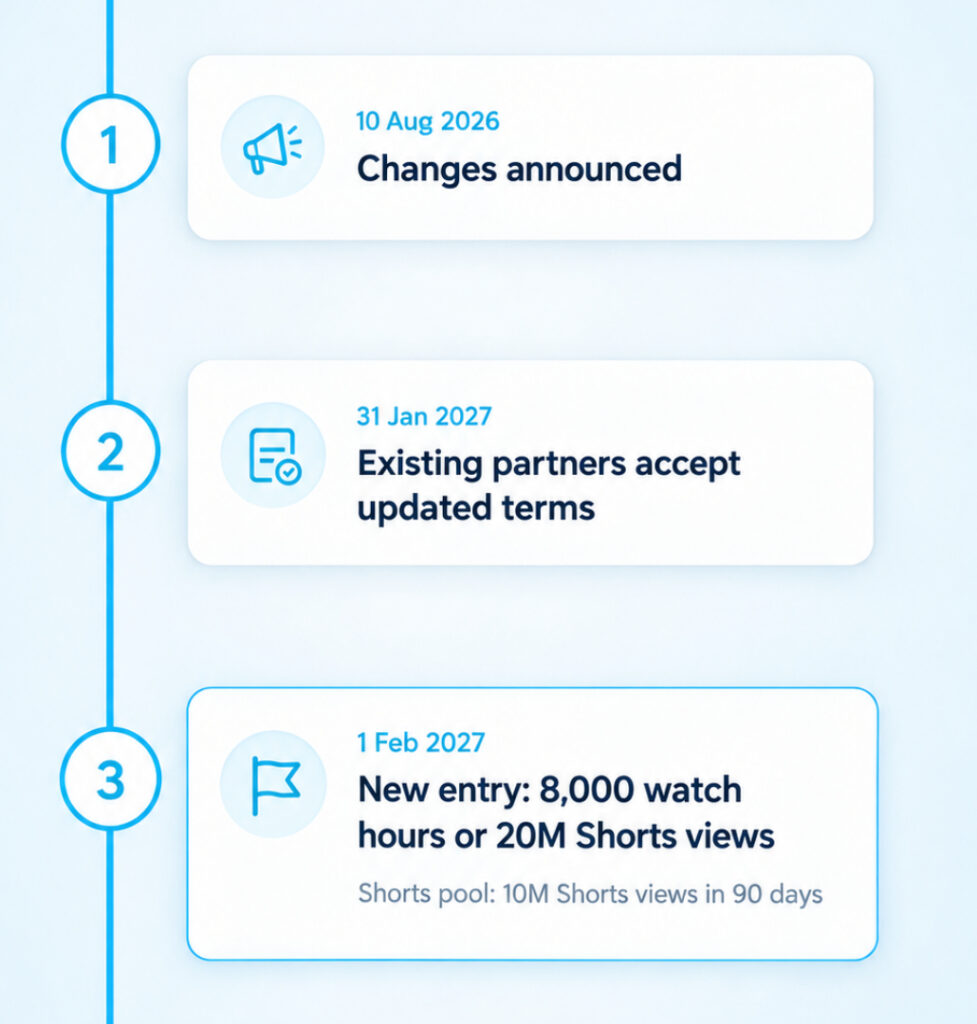
The Partner Program rules are also changing. From 1 February 2027, new creators will need 1,000 subscribers plus either 8,000 watch hours in the past year or 20 million Shorts views in the past 90 days, up from 4,000 hours or 10 million Shorts views. Channels already in the program keep their status. However, every creator will need 10 million Shorts views in the past 90 days to earn from the Shorts pool each month, and existing partners must accept the updated terms by 31 January 2027. YouTube lists the details on its Partner Program changes page.
Questions About YouTube Pay at 1 Million Subscribers
How much does YouTube pay for 1 million views?
At RPMs of $1 to $10, which covers most niches in the sample above, one million long-form views earns about $1,000 to $10,000. At the $2.30 median, that is about $2,300, while a high-paying finance channel like O’Brien’s earned closer to $20,000. The same number of Shorts views usually earns much less.
Do YouTube Shorts pay as much as long videos?
No. Shorts earn from a shared ad pool split by engaged views, creators keep 45 percent of what is allocated to them, and music use shrinks the pool further. Long videos earn directly from their own ads at a 55 percent share.
Does YouTube send money or a prize at 1 million subscribers?
YouTube does not pay a bonus for reaching 1 million subscribers. Eligible channels can claim a Gold Creator Award, a physical award that recognizes the milestone, and you may have to pay customs duties or taxes on it in some countries, as described on YouTube’s Creator Awards page.
Can a 1 million subscriber channel be a full-time income?
For most active channels, yes, but the income is uneven. Views rise and fall from month to month, sponsorship budgets change and part of the money goes to tax, editing and equipment. Creators who treat it as a business usually keep several income streams so that one slow month does not hurt.
Check Your Own RPM Before You Estimate
Online calculators guess your RPM, but you do not have to guess. Open YouTube Studio, go to the Analytics revenue tab and look at your RPM for the last few months. Multiply it by the views you realistically expect per month, then add sponsorships and fan payments as separate lines. That estimate will be far closer to your real income than any figure based on subscriber count alone.