No, Twitter, now X, does not give you a list of people who viewed your profile; its documented analytics metrics report counts rather than the names behind passive views. If you want to know whether one particular person has been checking your account, do not treat a rising number as an answer.
The useful distinction is between a view, a click and an action someone chose to take. Start by identifying which of those you are looking at, instead of trying to turn every sign of attention into a visitor name.
Supercharge X Engagement
Drive real interactions with high-quality reposts, likes, and followers.
View Counts Are Not a Visitor List
Before interpreting any number, read its label and the period it covers. A post total and a profile-related metric answer different questions, so comparing them as though they measure the same thing can lead you in the wrong direction.
Post Views and Repeat Impressions
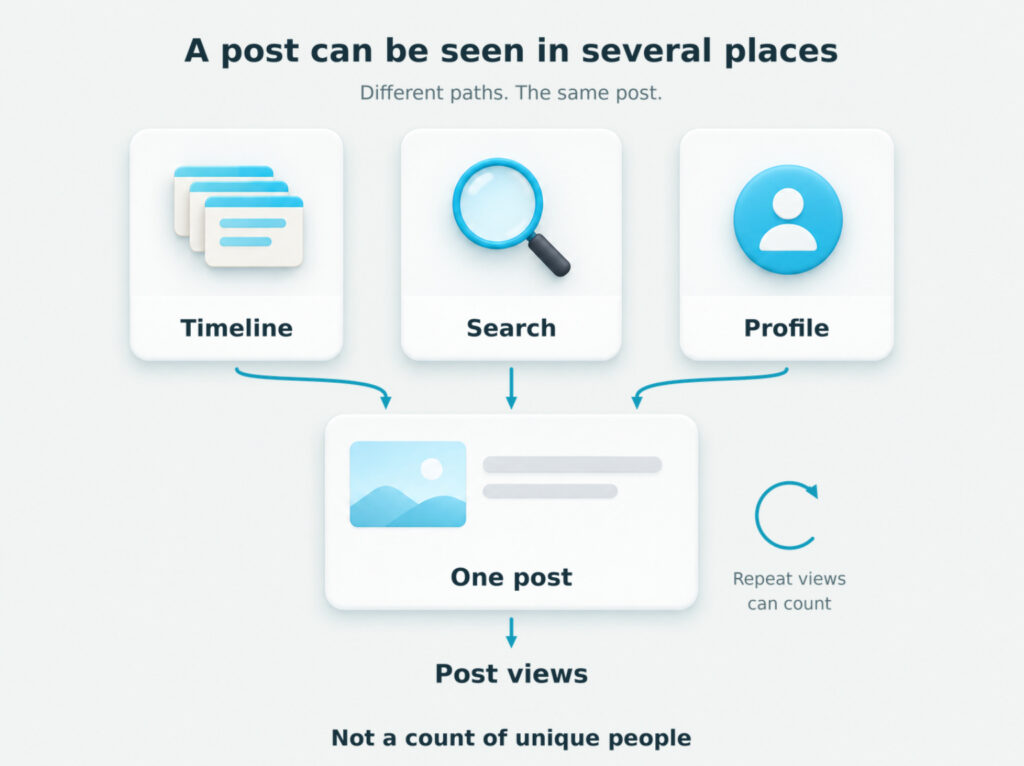
The view count beneath a post records views from places such as Home, Search and profile pages, and repeated views or your own views can count. Treat it as a measure of displays, not a head count or evidence that someone opened your bio.
Imagine a post showing 300 views. You cannot use that total alone to conclude that 300 different people visited your profile, or that a certain person returned several times; those would be guesses, not findings from the number.
Profile Clicks in Analytics
A profile click is more specific: the documented post metric counts clicks from a post to the author’s profile, without supplying the clickers’ names. Use that distinction when you are trying to judge whether a post made readers curious about its author.
Do not assume that a profile-click count on one post equals all visits to your account. Check the metric’s scope before comparing it with any account-level total, and avoid calling a figure “unique visitors” unless its definition supports that description.
This is not a promise that every account has the same analytics screen. Work with the metrics and date range your account actually offers, rather than searching for an old 28-day dashboard just because a tutorial shows one. When comparing two posts, use matching periods and the same metric so that the comparison answers a consistent question.
The Accounts That Actually Interact
A reply or repost identifies an account taking that action, but a post can be encountered away from its author’s profile, including in Home or Search. That is why a like, reply or repost is not proof of a profile visit.
Suppose someone replies to a post they found in a search. You can respond to their comment without assuming they also checked your biography, older posts or follower list; keep your interpretation tied to the action you can actually observe.
Want your X account to actually break through?
Real accounts. Real engagement. No bots, no shadowbans, ever.
See our X servicesWhen Browsing Stops Being Passive
For ordinary browsing, X does not provide other users with a named profile-visitor list, unlike the visible activity it describes for Spaces. Still, avoid treating “no visitor list” as a promise that everything you do on the platform is invisible.
A logged-in listener’s presence in a Space is visible unless anonymous listening is enabled, and anonymous listening hides identity from other participants rather than from X itself. Check that setting before joining if being visible in the room would matter to you.
Turning off the option that lets followers see which Spaces you are listening to is a separate control from listening anonymously. Do not assume that hiding a listening update from followers makes you anonymous inside the Space.
Treat privacy settings as platform-specific, not interchangeable switches. If you use both platforms, check how to turn off profile views on TikTok separately rather than applying X’s rules to that app.
Why Viewer Apps Cannot Prove a Profile Visit
Giving a tool permission to read your posts does not establish that it can identify profile visitors: X’s app-permission descriptions mention post-view counts and interactions, not a named profile-visitor list. Ask what the tool actually measures before trusting a result headed “Your top viewers.”
A familiar username is not evidence by itself. Before accepting a supposed visitor list, ask whether the service has simply shown you a follower or someone who already replied to a post.
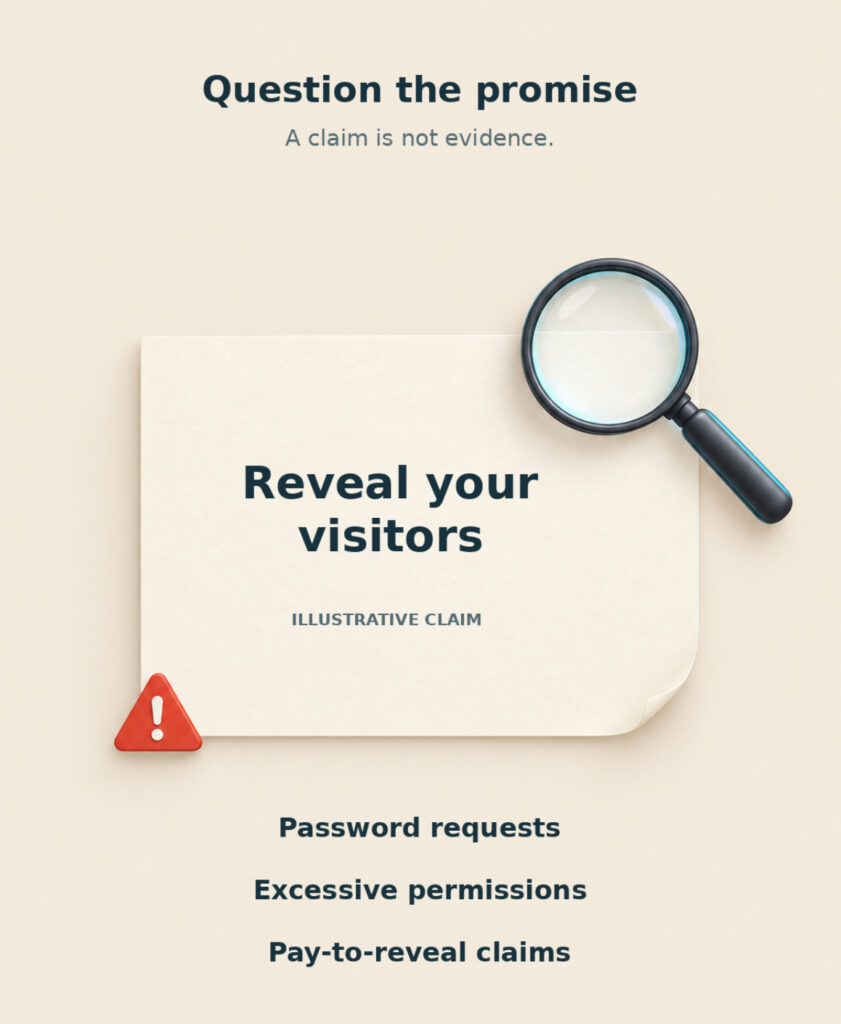
Use these questions to assess the offer before connecting anything:
- Password requests: Is the site asking you to type your X password into its own form? Stop and check where you are signing in before sharing it.
- Excessive permissions: Does a viewer claim come with a request to post, send messages or change account details? Do not approve access you cannot justify.
- Pay-to-reveal claims: Are names hidden behind a payment or another download? A blurred list and a countdown are reasons to pause, not proof that the promised data exists.
Evaluate the specific claim rather than assuming all scheduling and analytics software is suspicious. If you encounter the same visitor-list promise elsewhere, our guide to Instagram stalker apps explains what to check before trusting it.
Keep the purpose of a tool clear before granting access. Browsing public posts is a different task from identifying visitors, as our guide to viewing Instagram without an account explains.
Connected a Viewer App? Secure Your Account
If you already connected a service you no longer trust, start with its access rather than its promised results. Open X yourself instead of following another sign-in link from the service.
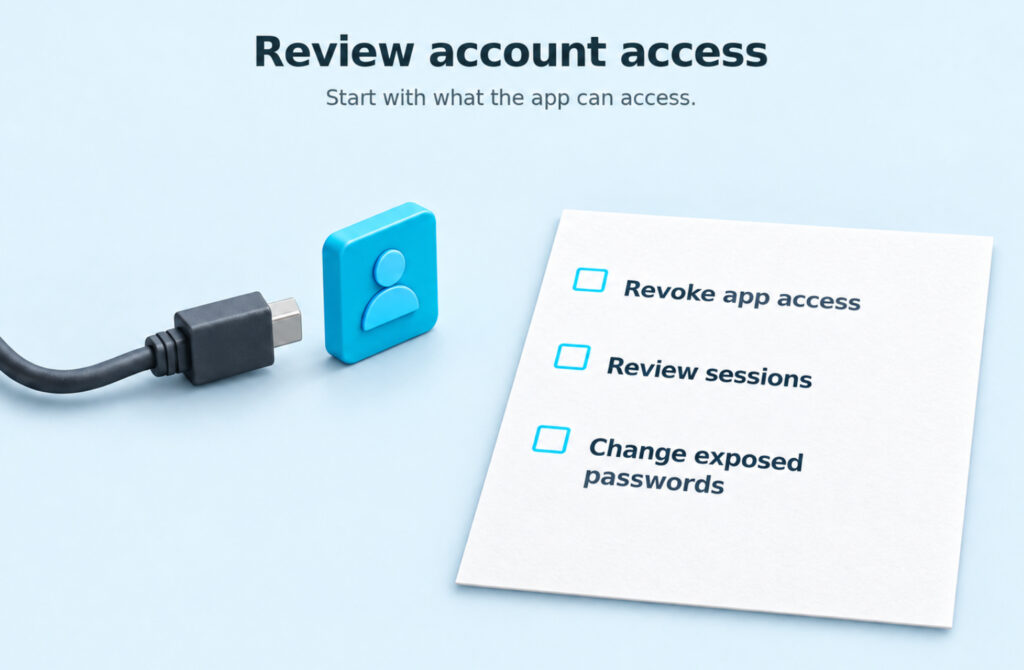
- Review connected apps. In your account settings, open Apps and sessions and check the permissions of the app you connected.
- Revoke the app’s access. Use Revoke access next to the app or after opening its details; do not treat closing its website as removing authorization.
- Review your sessions. In the Sessions area, check active logins and use Log out or Log out all other sessions as appropriate.
- Change an exposed password. If you gave your password to an app you no longer trust, revoke its access and change your password.
Do not assume that ending access erases earlier exposure: X warns that logging out a session may not delete previously cached data. Treat this as stopping further access, then review any unfamiliar activity you noticed rather than accepting the tool’s reassurance.
Questions About Twitter Profile Views
Does X Premium show who viewed my profile?
The published Premium feature list does not offer a named profile-viewer list. Do not buy a subscription on the assumption that it will reveal a visitor’s identity, and distinguish any analytics offer from that specific promise.
Can I see who watched my videos on X?
X’s video metrics provide viewing totals rather than a named audience list. Use a reply as evidence of that reply, not as a complete account of who watched or how much each person watched.
Does X notify someone when I search for their username?
No, an ordinary username search is not a notification type in X’s notification guidance, which describes alerts for actions such as replies, reposts and follows. Keep searching separate from any later action you choose to take.
Does a rise in profile visits mean someone is stalking me?
A count does not establish a person’s identity or intent, and X’s profile-click metric supplies a number rather than either of those things. If you are worried about specific messages or threats, focus on that concrete behavior instead of guessing who caused a traffic change.
Use Real Signals, Not Visitor Guesses
Decide what you actually need to do next: understand a post’s response, check your account access or deal with unwanted contact. Use evidence that fits that task, and leave an unexplained view count as a number rather than turning it into a story about a particular person.