DM stands for direct message. On Instagram, a DM is a private message you send to one person or a group, and it never appears in your feed, in search or on your profile. Your DMs live in the Messages section of the app, and only the people in a chat can see what’s said there.
| DM, three ways DM (noun): a private message, as in “I got a DM from her.” DM (verb): to send one, as in “DM me the link.” DMs (plural): your inbox, as in “check your DMs.” |
Boost Your Instagram Presence
Make your Reels go viral. Get premium followers, likes, and comments in minutes.
What DM Means on Instagram
DM works as both a noun and a verb, which is why it turns up in so many captions and bios. “Send me a DM” and “DM me” mean the same thing: message me privately instead of replying in public. When a creator writes “DMs open” in a bio, they’re telling you they read and answer their messages.
The easiest way to understand a DM is to compare it with a comment. A comment sits under a post, where anyone who can see that post can read it, like it and reply to it. A DM goes into a private chat, and only the people in that chat can read it. That’s why people move to DMs for questions about orders, plans or anything they’d rather not share with a whole comment section.
You’ll also see “slide into the DMs”, which is slang for messaging someone out of the blue, often to flirt or to start a conversation. On Instagram, it simply means your first message lands in their inbox, or in their requests if they don’t follow you.
Where To Find Your DMs
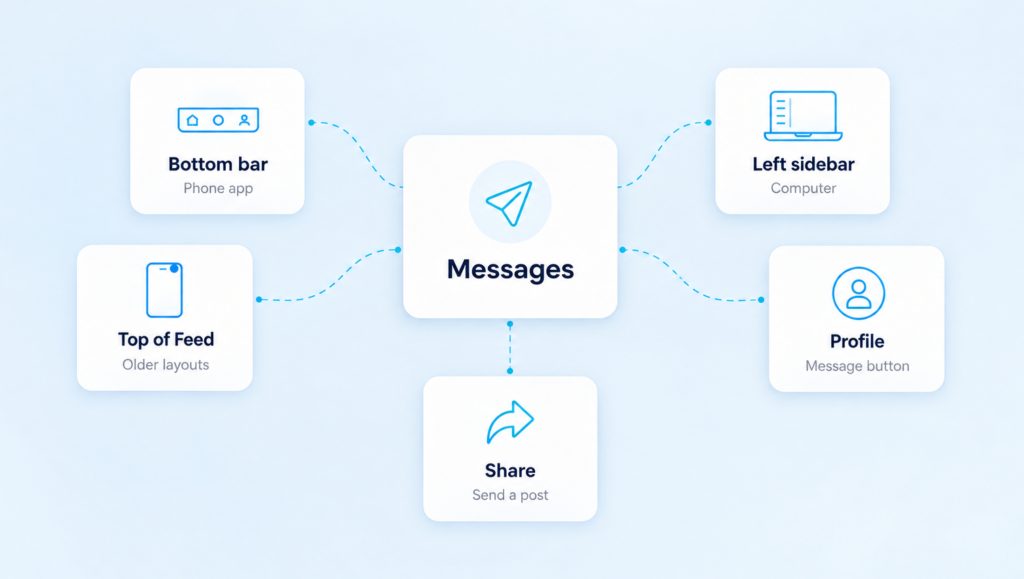
On the current Instagram app, tap Messages in the bar at the bottom of the screen. Instagram’s help pages now give that as the first step for everything inside chats, from voice messages to disappearing messages. If your app still shows an older layout, Messages sits in the top right corner of Feed instead, which is where most older guides still send you.
On a computer, open Instagram in your browser and click Messages in the menu on the left. Your chats and requests are the same ones you see on your phone. A few features, such as read receipt settings and disappearing messages, only work in the app, though.
There are two shortcuts as well. To message someone you follow, open their profile and tap Message. To send a post or reel to a chat, tap the share button under it and pick the people you want to send it to.
How To Send a DM
Instagram’s send a message help page lays out the same short path for the app and the website. The only difference is whether you tap or click.
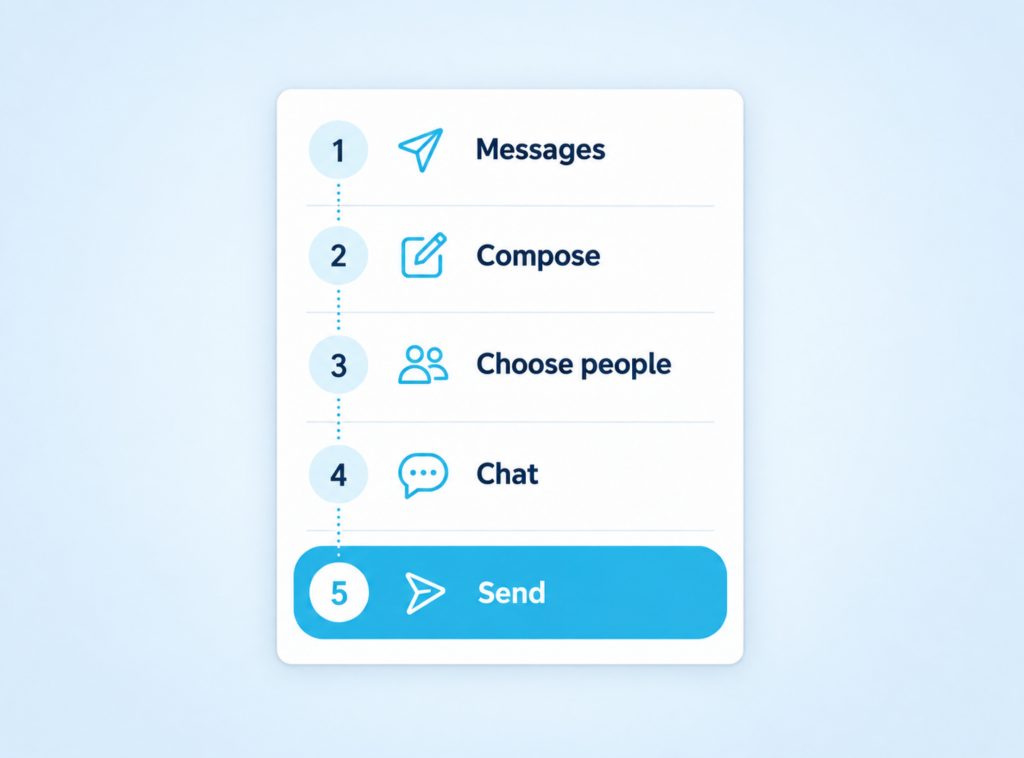
- Open Messages.
- Select Compose to start a new chat.
- Choose the people you’d like to message, then select Chat.
- Type your message. You can also add a photo or video from your library.
- Select Send.
Your message appears in the chat straight away. If the other person follows you or you’ve chatted before, it goes to their Chats list. If not, it arrives as a message request, which comes with a few limits covered below.
Start a Group Chat
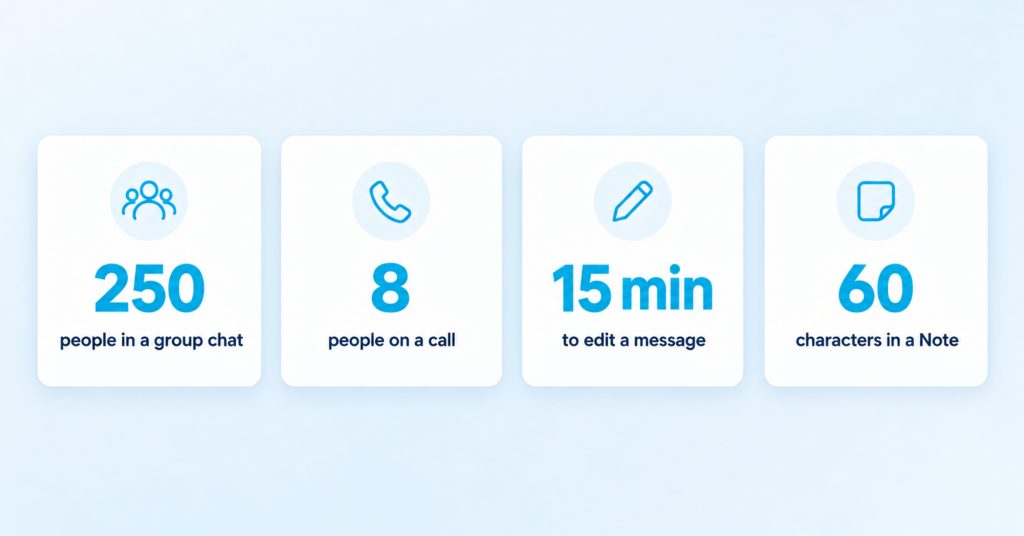
To start a group, follow the same steps and choose more than one person before you select Chat. Instagram group chats can hold up to 250 people, so the lower limits you may have read elsewhere, often 32 or 15, are out of date. If you’d rather not be pulled into groups by strangers, the message controls described below let you limit who can add you.
Chats vs Message Requests
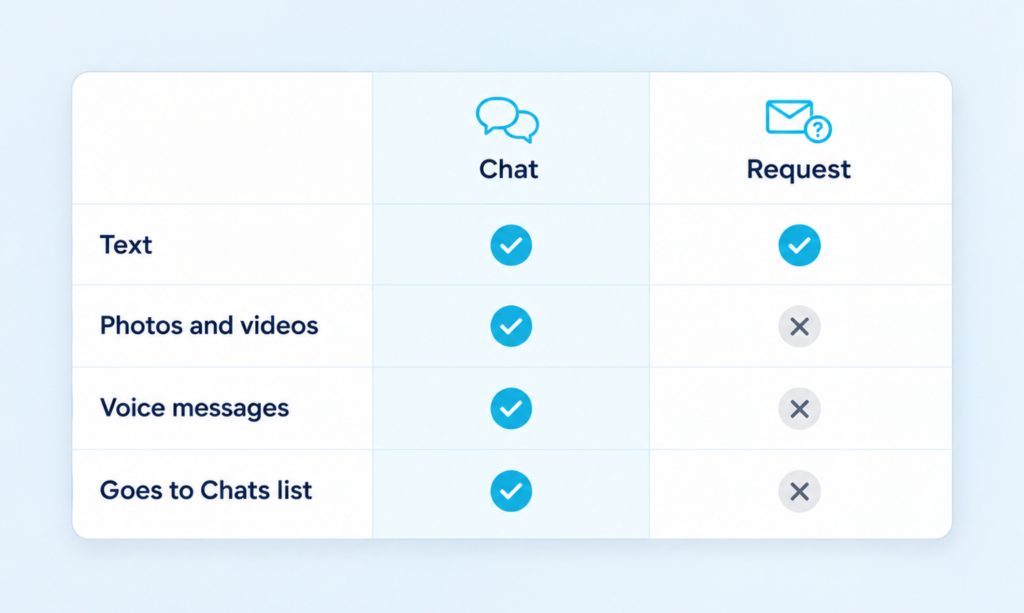
Not every DM lands in your main inbox. When someone who doesn’t follow you, and isn’t already connected to you, sends a message, it arrives as a message request. Instagram says a request can only contain text, so photos, videos and voice notes can’t come through until you accept it.
Requests also let you read before you decide. Request messages aren’t marked as seen until you accept them, so the sender can’t tell you’ve opened theirs. To deal with them, go to Messages, tap Requests and open a message, then choose Accept or Delete. Delete All at the bottom clears every request in one go, and once you accept someone, their future messages go straight to your inbox.
Requests that look like spam, or that match your Hidden Words settings, go to a separate Spam folder instead, and you won’t get notifications for them. Business and creator accounts also get Primary and General folders, and they can flag messages in Instagram DMs to come back to them later.
Choose Who Can Message You
You decide who can send you requests in the first place. Go to your profile, tap Menu, then Messages and story replies, then Message requests. From there, you can choose whether requests from people on Instagram go to your requests folder or whether you receive them at all.
The same settings include who can add you to groups, so you can keep group invites to people you follow. Teen Accounts are stricter by default and only receive messages from accounts they follow or are already connected with, as Instagram explains in its Teen Accounts guide.
Want your Instagram to actually take off?
Real accounts. Real engagement. No bots, no shadowbans, ever.
See our Instagram servicesWhat You Can Do in a Chat
A DM is much more than a text box. Once you’re inside a chat, these are the main tools Instagram gives you.
- Voice messages. Tap and hold the microphone to record, and anyone in the chat can tap View transcription to read what you said.
- Calls. Start a call from the chat, with up to 8 people on one call.
- Edits. You have 15 minutes to edit a sent message, up to 5 times, and Instagram shows Edited above it. Messages that include mentions can’t be edited.
- Unsend. This removes a message for everyone in the chat, although they may already have seen it.
- Disappearing messages. Swipe up in a one-to-one chat to turn them on or off. They don’t work in group chats or on a computer.
- Notes. Share a short note of up to 60 characters at the top of the inbox, where it stays for 24 hours.
When a full reply feels like too much, you can react to messages on Instagram with an emoji instead. Reactions keep a busy chat moving without adding another line of text.
Are Instagram DMs Private?
Yes, in the sense that other users can’t see them. Your DMs don’t show on your profile, in search or in anyone’s feed, and only the people in a chat can read it.
They’re no longer end-to-end encrypted, though. Instagram’s help center says end-to-end encrypted messaging is no longer supported as of 8 May 2026, and it points people who want encrypted chats to WhatsApp. Some older guides still describe Instagram DMs as encrypted, so treat that claim as out of date. If a conversation is truly sensitive, such as passwords, bank details or ID documents, keep it out of Instagram DMs altogether.
What the Other Person Can Still Do
Privacy in a DM also depends on the people you’re talking to. Anyone in the chat can screenshot a message, forward it or report it. If a reported message was edited, its edit history goes along with the report.
Sharing posts adds one more wrinkle. When you send a post from a private account, only people who follow that account can see it in the chat. A friend who doesn’t follow them won’t be able to view it, even though you sent it straight to them.
Instagram DM Questions
Can someone see that I read their DM?
Usually, yes. Read receipts show the other person when you’ve seen their message, and you can manage read receipts for one chat or for all chats in the app, though not on a computer. Message requests work differently, because a request isn’t marked as seen until you accept it.
Does unsending a DM remove it for the other person?
Yes. When you unsend a message, it’s removed from the chat for everyone in it. The catch is timing, because the other person may already have read it before you pulled it back.
Can I DM someone who doesn’t follow me?
Yes, unless they’ve chosen not to receive message requests. Your message arrives as a request and can only contain text, so save photos and voice notes until they accept. Teen Accounts are the main exception, since they only receive messages from accounts they follow or are already connected with.
Do Instagram DMs disappear on their own?
No. Messages stay in the chat until someone unsends them, unless disappearing messages are on, so it’s worth knowing what Vanish Mode means before you swipe up. With disappearing messages switched on, Instagram removes new messages after a set amount of time.
Why does a DM say “Instagram User” instead of a name?
A chat that suddenly shows Instagram User usually means that account is no longer available to you, and this guide to what Instagram User means walks through the possible reasons. The conversation itself usually stays in your inbox, so you can still scroll back through it.
Keep Your Inbox Under Control
A tidy inbox takes very little upkeep. Check Requests every so often, because messages from people who don’t follow you won’t reach your Chats list on their own, and useful ones sometimes wait there unnoticed.
Set your message controls once and leave them, deciding who can send you requests and who can add you to groups. For anything private enough to need encryption, move the conversation to an encrypted app. That leaves Instagram DMs for what they do best: quick, private conversations with the people you choose.